The network address is the first address in the block. The network address defines the network to the rest of the Internet. Given the network address, we can find the class of the address, the block, and the range of the addresses in the block
Become an O’Reilly member and get unlimited access to this title plus top books and audiobooks from O’Reilly and nearly 200 top publishers, thousands of courses curated by job role, 150+ live events each month,
Classful IP addressing was an early method (1981–1993) for assigning IP addresses and dividing the IPv4 address space. It was later replaced by CIDR (Classless Inter-Domain Routing), which uses prefixes instead of fixed classes.
This is often referred to as "classful" addressing because the address space is split into three predefined classes, groupings, or categories. Each class fixes the boundary between the network-prefix and the host-number at a different point within the 32-bit address.
Note that the book version of The TCP/IP Guide has the same content but it is restructured into chapters to better suit a hardcover book. This table of contents has been designed to integrate with the free online verrsion of The TCP/IP Guide.
Why do we need IP addresses? Q: Why have both an IP and MAC address for each interface? Why not simply make do with MAC addresses? A: Scalable routing. Let’s walk through a simple host-to-host packet delivery example and then understand how the structure of IP addresses helps scale routing.
Let’s take a look closer at both classful and classless addressing, the history and purpose behind them, and the reasons classlessaddressing has really won out.
Classfuladdressing divides IP addresses into fixed classes (A, B, C, D, E), each with predefined ranges. In contrast, classless addressing, also known as CIDR (Classless Inter-Domain Routing), offers more flexibility by allowing addresses to be subdivided into smaller blocks called subnets.
To provide the flexibility required to support networks of varying sizes, the Internet designers decided that the IP address space should be divided into three address classes-Class A, Class B, and Class C. This is often referred to as classfuladdressing.
Then, it will discuss some effective IPv4 addressing mechanisms, including classful versus classless addressing, fixed-length versus variable-length subnetting, supernetting, and private addressing.
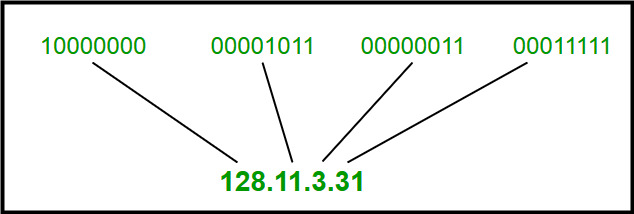 Classful IP addressing was an early method (1981–1993) for assigning IP addresses and dividing the IPv4 address space. It was later replaced by CIDR (Classless Inter-Domain Routing), which uses prefixes instead of fixed classes.